Why Your Meal-Prepped Smoothie Separates Into Layers by Lunchtime
Quick Answer: Smoothie separation happens because heavier particles (fruit pulp, seeds) settle faster than lighter liquid components once blending’s suspension force stops — the fix is blend order and a thickener, not just shaking harder before drinking. Blend liquids and thickeners first, add fruit last, briefly.
Your morning smoothie looked perfectly blended when you poured it into a jar. By the time you’re ready for it a few hours later, there’s a distinctly watery layer at the bottom and thick pulp sitting on top. That’s a predictable physics problem with a genuinely fixable cause.
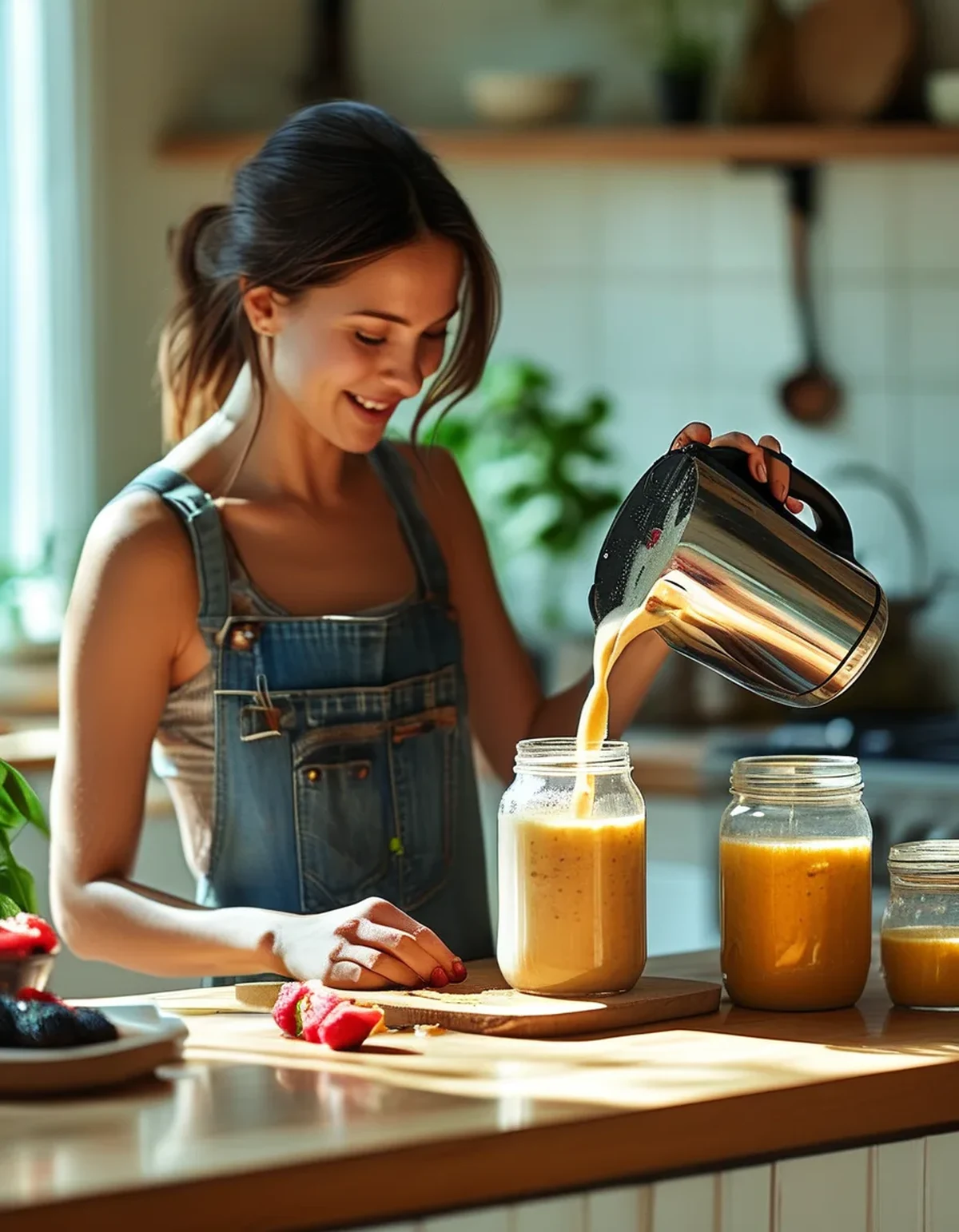
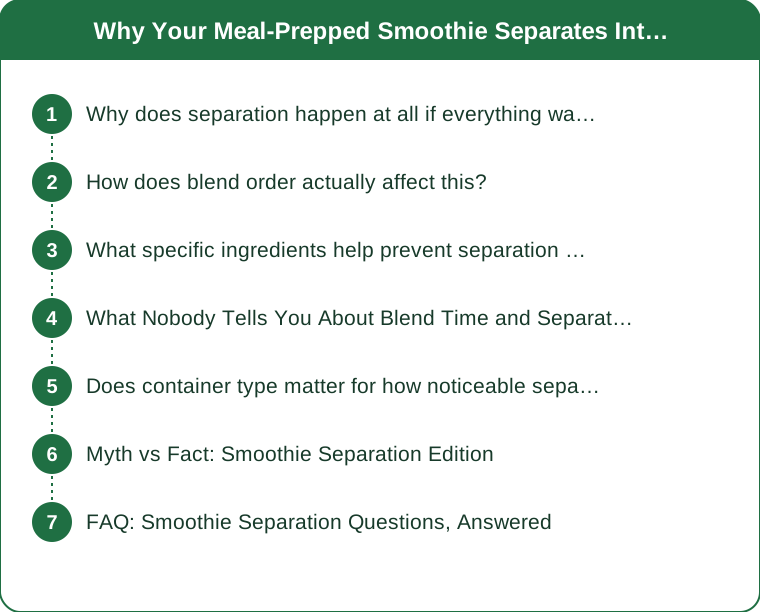
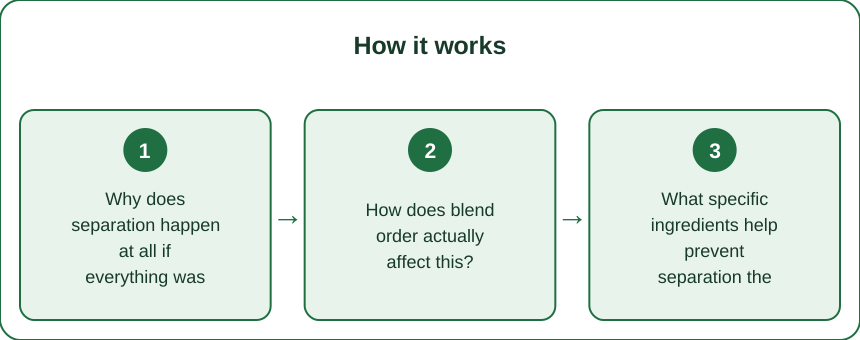
Why does separation happen at all if everything was blended together?
Blending temporarily suspends particles of different densities evenly throughout the liquid, but that suspension isn’t permanent — it’s held together by the blend’s momentum and the liquid’s viscosity in that moment. Once the smoothie sits still, gravity gradually pulls denser particles (fruit pulp, seeds, ice crystals as they melt) downward while less dense liquid rises, and how fast that separation becomes visible depends heavily on the smoothie’s overall viscosity and blend order.
How does blend order actually affect this?
Blending liquids and a thickening element (like a banana, oats, or yogurt) first, before adding other fruit, creates a more viscous base that suspends particles longer once you add everything else. If fruit and ice go in early and liquid gets added last or blended briefly at the end, you get a thinner overall consistency that separates faster, since there’s less viscous ‘grip’ holding particles suspended.
What specific ingredients help prevent separation the most?
Banana, chia seeds, and Greek yogurt are the most effective at increasing viscosity enough to slow separation significantly — banana in particular acts almost like a natural thickener/emulsifier due to its starch and fiber content. A tablespoon of chia seeds blended in (not just sprinkled on top) can noticeably extend how long a smoothie stays uniformly mixed, sometimes doubling the time before visible separation starts.
What Nobody Tells You About Blend Time and Separation
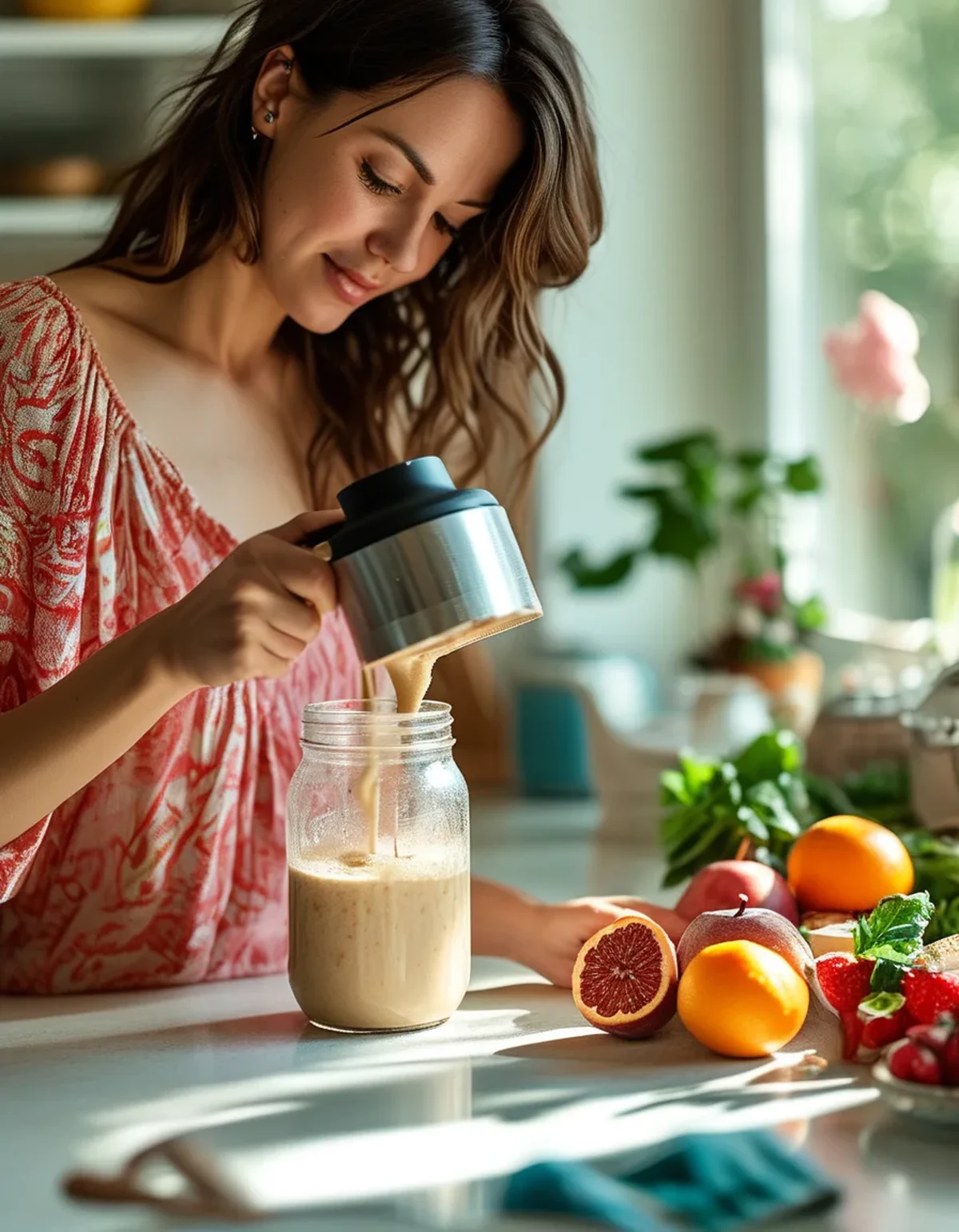
Here’s a detail most recipes skip: blending longer than necessary can actually make separation worse, not better, for certain ingredient combinations — over-blending can break down fiber structures (especially in leafy greens) that would otherwise help hold particles in suspension, resulting in a thinner, faster-separating liquid despite more blending time. A shorter, sufficient blend — just until smooth, not excessively long — often holds together better than an extra-long blend on high speed.
Does container type matter for how noticeable separation looks?
Somewhat — a tall, narrow container (like a standard smoothie bottle) makes separation layers more visually obvious than a wider, shorter container holding the same volume, purely due to how the layers distribute vertically. This doesn’t change whether separation is happening, but it affects how alarming it looks and how easily a quick shake can re-mix it before drinking.
Myth vs Fact: Smoothie Separation Edition
Myth: Separation means your smoothie has gone bad. Fact: It’s a normal physical process related to density differences settling over time, not a spoilage indicator, assuming it’s been refrigerated properly and consumed within a reasonable window.
Myth: Blending longer always prevents separation better. Fact: Over-blending can break down fiber structures that help hold particles suspended, sometimes making separation happen faster, not slower.
Myth: A tighter lid prevents separation. Fact: Lid tightness affects spillage and air exposure, not the gravity-driven settling process that causes layer separation.
FAQ: Smoothie Separation Questions, Answered
Is it safe to drink a separated smoothie after shaking it back together?
Yes, generally — a quick vigorous shake re-suspends most of the settled particles well enough to drink normally, assuming proper refrigeration and timing.
How long can a meal-prepped smoothie sit before separation becomes a real problem?
Most well-thickened smoothies stay reasonably mixed for 4-6 hours in the fridge; thinner blends without a thickening ingredient can visibly separate within 1-2 hours.
Does freezing a smoothie prevent separation entirely?
Freezing halts the settling process while frozen, but separation can still occur during the thawing process as ice melts unevenly — shaking or re-blending briefly after thawing usually solves this.
TL;DR:
- Separation happens because denser particles settle faster than liquid once blending’s suspension stops
- Blend liquid and a thickener (banana, chia, yogurt) first for a more viscous base before adding other fruit
- Over-blending can actually worsen separation by breaking down fiber that helps hold particles suspended
- A quick shake before drinking safely re-mixes a separated smoothie — it isn’t a spoilage sign
Next batch, blend your liquid and banana or chia first for 15-20 seconds before adding the rest — that order alone usually holds a meal-prepped smoothie together much longer.
Keep Reading
This article is for general informational purposes only and is not medical advice. Always consult a qualified health professional for guidance specific to you.