Why Adding More Ice Makes Your Smoothie Thinner Not Thicker
Quick Answer: Ice is water in a temporary shape. Blender blades generate heat and friction, ice melts during blending, and what you actually added was liquid. Frozen fruit works instead because it contributes fibre, pulp, and pectin along with its water, so it thickens as it breaks down. If your smoothie is thin, the fix is more frozen solids and less free liquid, not more ice.
Freeze the fruit, not the water.
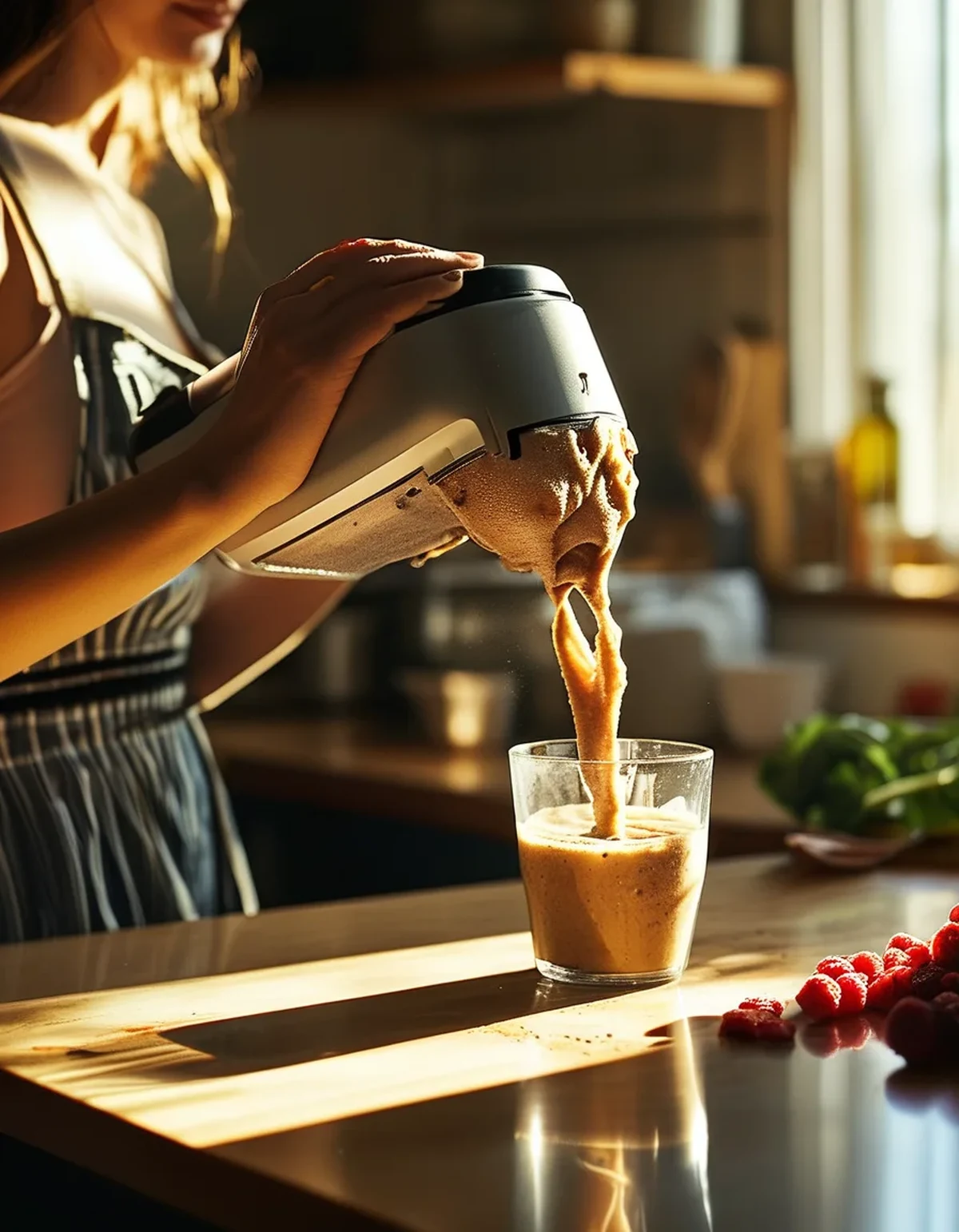
Why does ice thin a smoothie out?
Because a blender is a heat engine, and ice does not survive it.
A domestic blender puts several hundred watts into a small volume, and most of that energy ends up as heat through friction and shear. A sixty second blend measurably warms the contents, which is why a long blend on a high powered machine can produce a smoothie that is noticeably not cold.
Ice in that environment does exactly what it does in a warm drink. It melts. A cup of ice contributes roughly the same water it was frozen from, and nothing else. No fibre, no pulp, no soluble solids. It dilutes flavour at the same time.
The reason it feels like it should work is the first fifteen seconds, when it is still solid and the mixture is genuinely thick and slushy. Then it keeps blending, the ice finishes melting, and the result is thinner than what you started with. People then add more ice, blend longer to break it down, and get a thinner result again.
Frozen fruit behaves completely differently. Frozen banana, mango, or berries bring their own solids with the water, and as the cell structure breaks down, pectin and fibre are released into the mixture. Frozen banana in particular contributes starch and pectin that thicken substantially.
The result is that the same volume of frozen fruit and ice produce opposite textures, for reasons that have nothing to do with temperature.
What actually makes a smoothie thick?
Four categories, and they work by different mechanisms so they combine well.
Frozen fruit, especially banana. The reliable base. Frozen banana is the most effective single ingredient, because it is high in pectin and starch and it breaks down into a creamy rather than icy texture. Frozen mango and peach behave similarly; frozen berries thicken less because they hold more water and more seeds.
Soluble fibre and gums. Chia, ground flax, and oats absorb liquid and thicken over time. Chia and flax need a few minutes to hydrate, which is why a smoothie made with them is noticeably thicker after five minutes in the fridge than straight from the blender. Oats thicken best if soaked first.
Fat and protein. Nut butter, avocado, full fat yoghurt, and protein powder all add body. Half an avocado is the most texturally effective and least detectable of these, and it makes a smoothie creamy rather than merely thick.
Less liquid. The most overlooked. Most thin smoothies contain too much milk or juice, and the correction is subtraction rather than addition. Start with about half the liquid you think you need and add more only if the blender stalls.
A practical ratio to work from: roughly one part liquid to two parts frozen solids by volume, plus a spoonful of a fibre or fat ingredient. Adjust from there.
And one that is not an ingredient at all: the order things go in the jug. Liquid at the bottom, soft ingredients next, frozen items on top. This lets the blades create a vortex and pull solids down, which means less liquid is needed and the blend is shorter, which in turn means less melting.
5 Mistakes That Make Smoothies Watery
1. Blending far too long. Once it is smooth, it is finished. Extra time adds heat, melts frozen ingredients, and breaks down the fibre structure doing the thickening. Thirty to forty five seconds is usually plenty in a decent machine.
2. Using fresh fruit with ice instead of frozen fruit. This is the same mistake in two parts. Fresh fruit brings no cold and ice brings no substance, so you get a diluted, moderately cold drink. Freezing the fruit solves both at once.
3. Pouring liquid in by eye. Free liquid is the main variable in thickness, and eyeballing it typically overshoots. Measuring once, and remembering the number, fixes it permanently.
4. Adding low fat dairy alternatives and expecting body. Most unsweetened plant milks are largely water. They do not thicken anything, and a smoothie built on them needs its body from somewhere else.
5. Making it too far ahead and expecting it to hold. Smoothies separate within an hour or two as the pulp settles and the foam collapses. This is not a thickness failure, it is normal, and a quick stir mostly restores it.
Does the season change how you should build one?
It does, in two ways that both start to matter around now.
Frozen fruit becomes the better value option, and fresher. Late summer produce is at its peak and about to be at its most expensive out of season. Buying good fruit now and freezing it in portions is the single most practical thing to do this month, and frozen fruit is generally frozen close to picking, so it often has better flavour than the out of season fresh equivalent in January.
Freeze bananas peeled and in chunks, laid flat on a tray before bagging, so they do not fuse into a block. Berries and peaches the same way.
Cold drinks get less appealing as mornings cool, and the usual response is to add more liquid and drink it faster. A better response is to shift the composition. A thicker, spoonable smoothie in a bowl works in cool weather where a cold drink does not, and it is the same ingredients with less liquid.
Other seasonal adjustments worth making:
Swap some frozen fruit for cooked and cooled squash or sweet potato, which thickens beautifully and reads as autumnal rather than tropical. Warm spices, cinnamon, ginger, nutmeg, do the rest.
Let it sit for five minutes if you have used chia or flax. In cooler weather this is no hardship, and the texture difference is significant.
Use room temperature liquid rather than fridge cold if you find the result too cold to drink comfortably. The frozen fruit provides plenty of chill on its own.
One nutrition note worth making, since it comes up constantly: a smoothie is food, not a drink, and it is easy to build one that carries a lot of sugar from fruit and juice. If you are managing blood sugar or any specific dietary requirement, this is general information rather than tailored advice, and a dietitian will give you something more useful than a recipe.
FAQ: Smoothie Texture Questions, Answered
Can I use ice at all?
Yes, if you want it colder and slightly thinner, which is occasionally what you want. Just do not use it as a thickener, because it is doing the opposite.
Why is my smoothie thick in the blender and thin in the glass?
Usually air. High speed blending whips in a lot of foam, which reads as volume and thickness and then collapses within a minute. The underlying mixture was always thinner than it looked.
What is the best thickener if I do not want banana?
Half an avocado for creaminess, or a tablespoon of chia left to sit for five minutes. Frozen mango and cooked cooled sweet potato both work well too.
How much liquid should I actually use?
About half the volume of your frozen ingredients as a starting point. Add more only if the blender is struggling, and add it a splash at a time, because it is far easier to thin a smoothie than to thicken one.
TL;DR:
- Blenders generate heat, so ice melts during blending and ends up as water that dilutes both texture and flavour.
- Frozen fruit thickens because it brings fibre, pectin and pulp along with its water, and frozen banana is the most effective single ingredient.
- Use roughly one part liquid to two parts frozen solids, layer liquid at the bottom, and stop blending as soon as it is smooth.
- Freeze peak season fruit in portions now, and shift toward thicker spoonable versions as mornings cool.
Next time, halve the liquid and freeze the banana. Those two changes fix nearly every thin smoothie.
Keep Reading
This article is for general informational purposes only and is not medical advice. Always consult a qualified health professional for guidance specific to you.