Why a Frozen Banana Changes Your Smoothie More Than Any Powder
Quick Answer: Frozen banana contributes three things nothing else in a standard smoothie does — pectin that stabilizes the emulsion, ice crystals that provide chill without dilution, and starch that thickens as it breaks down under blade shear. Powders add nutrition and flavor but almost no structure. That’s why a smoothie without banana tastes thin no matter what else you put in it.
You upgrade the protein powder, add collagen, buy the expensive greens blend, and the texture is still watery. Then you drop in one frozen banana and it becomes the thing you were trying to make.
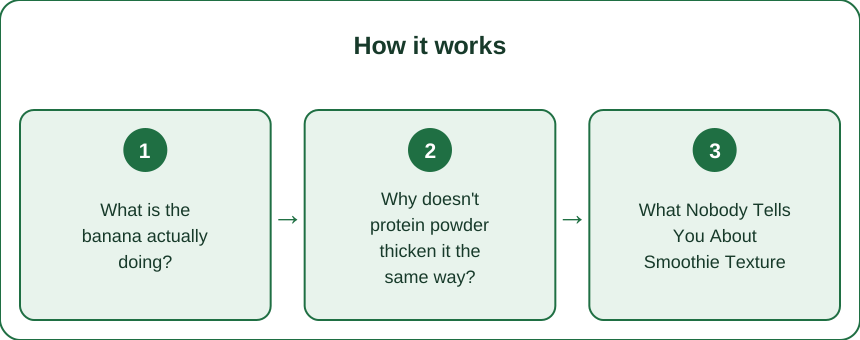
What is the banana actually doing?
Three separate jobs, and only one of them is flavor.
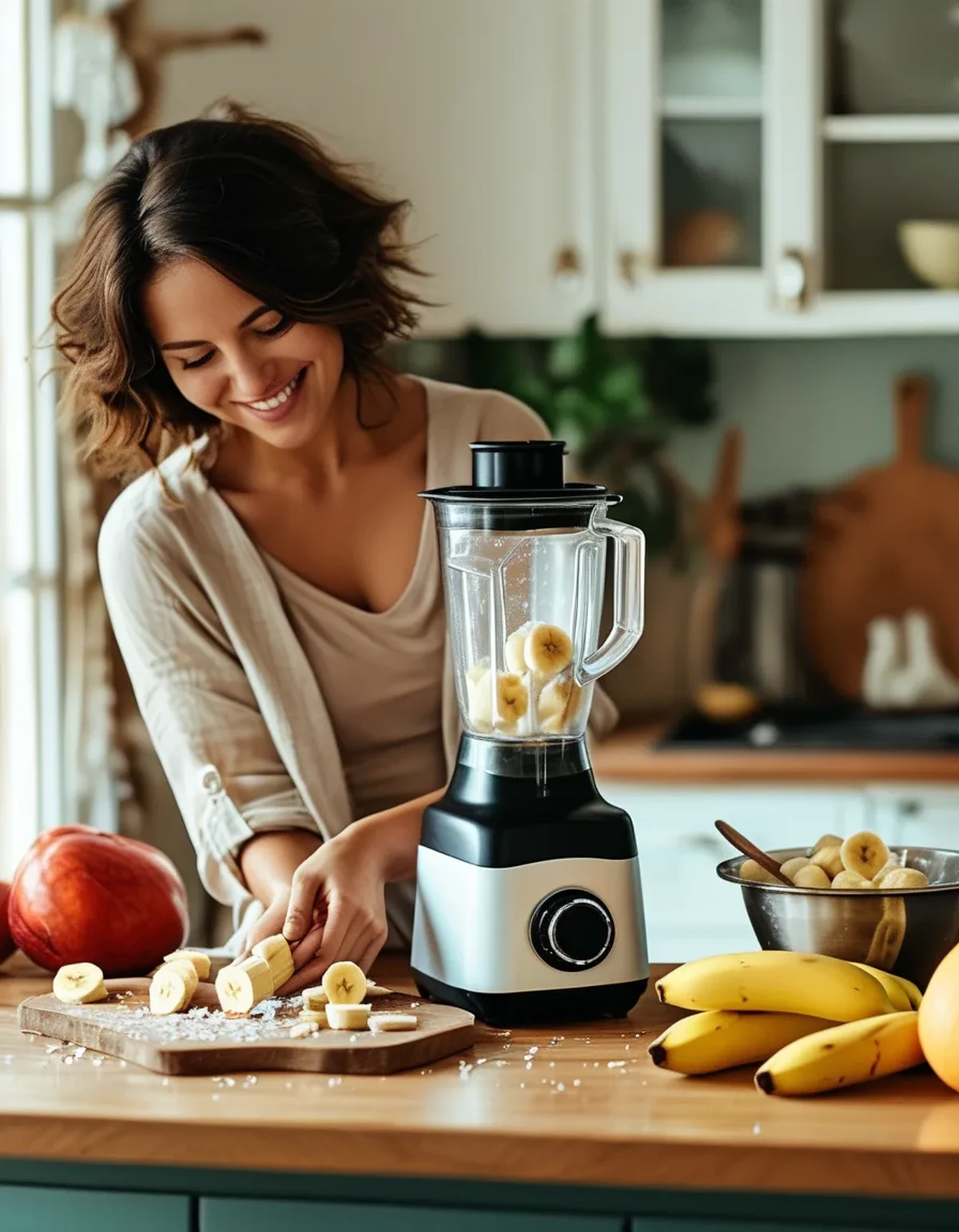
Structure from pectin. Bananas contain soluble pectin that acts as a natural thickener and emulsion stabilizer. It’s what holds the fat, water, and solids together so they don’t separate into layers within minutes.
Chill without dilution. Frozen fruit lowers the temperature the way ice does, but the water it contributes is bound inside plant tissue rather than free. Ice adds water; frozen banana adds cold plus body.
Starch that behaves under shear. Banana starch granules break down under blade action and contribute viscosity. A slightly underripe banana has more starch and less sugar; a very ripe one has more sugar and less thickening power.
Remove it and you’ve removed the emulsifier, the thickener, and the chilling agent simultaneously — which is a lot to ask a scoop of powder to replace.
Why doesn’t protein powder thicken it the same way?
Because most powders dissolve rather than suspend.
Whey isolate in particular goes into solution readily and adds very little viscosity. It’ll thicken slightly as the proteins hydrate over a few minutes, which is why a smoothie left standing gets marginally thicker, but it’s a small effect.
Casein and plant proteins do more — pea and rice proteins are less soluble and stay partly suspended, which reads as thicker but also grittier.
What none of them do is stabilize an emulsion. A powder-thickened smoothie separates on the counter in ten minutes; a banana-based one holds for an hour.
The practical implication: if you’re trying to lose the banana for sugar reasons, you need to replace the structure separately, not just add more powder. That’s a different problem than it appears.
What Nobody Tells You About Smoothie Texture
Ripeness changes everything. A green-tipped banana thickens more and tastes less sweet; a spotted one sweetens more and thickens less. Freeze at the ripeness that matches what you want, not whenever you remember.
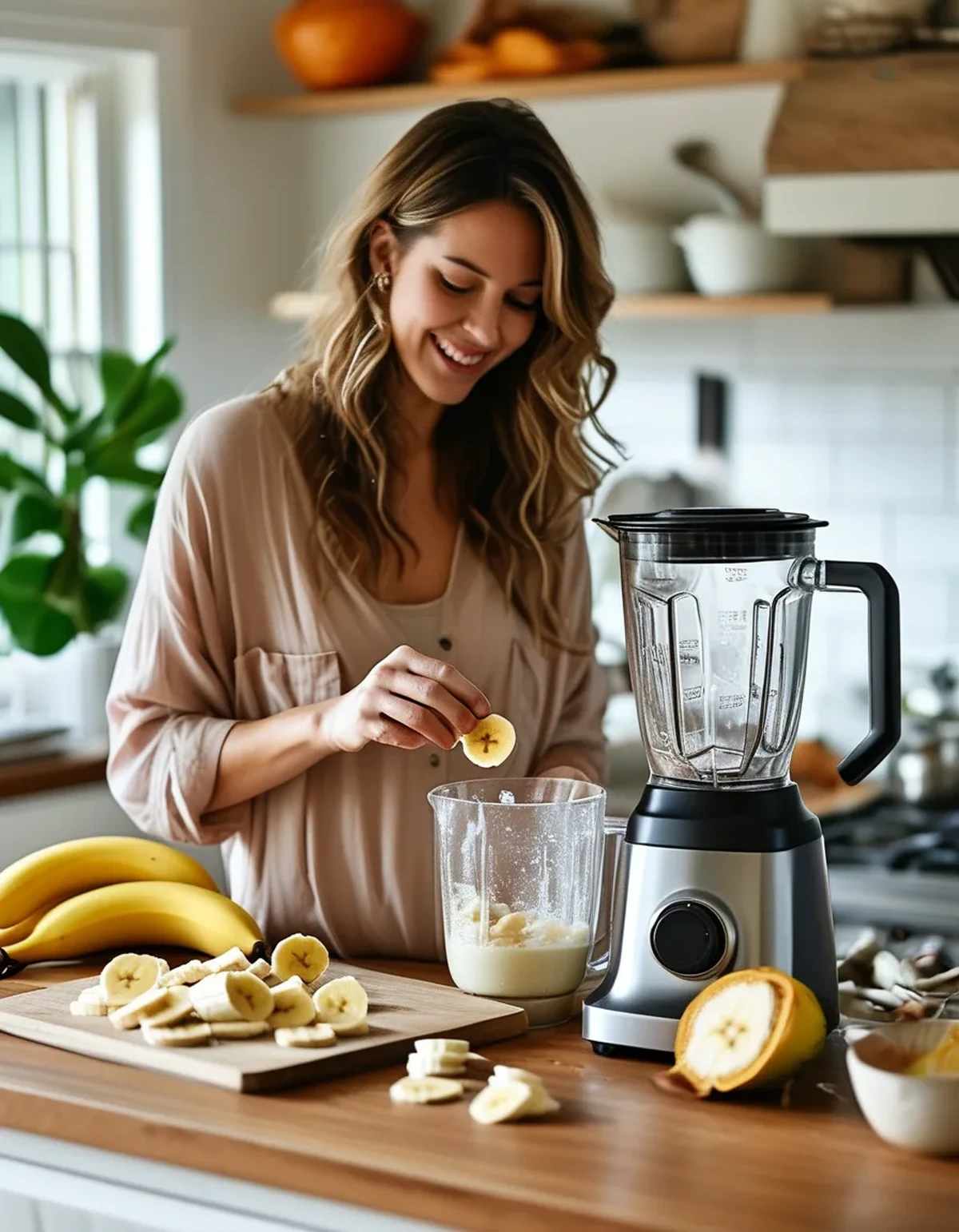
Freeze in coins, not whole. Whole frozen bananas strain motors, blend unevenly, and take up more freezer space. Slice before freezing and the blender works half as hard.
Cold liquid matters as much as cold fruit. Room-temperature milk raises the whole mixture’s temperature and softens the frozen pieces before they can be broken into fine particles, which produces a looser result.
Over-blending thins it out. Blade friction generates real heat. Past about 60 seconds in a high-power blender, you’re melting the ice crystals you just made and the smoothie loosens visibly.
The order in the jar changes the outcome. Liquid first, then soft ingredients, then frozen last. It creates a vortex that pulls solids down instead of leaving them spinning above the blades.
What can actually replace a banana?
Nothing single-handedly, but a combination gets close.
Frozen cauliflower is the most effective substitute for body — it’s neutral in flavor, high in fiber, and contributes the frozen-tissue effect. About half a cup per serving.
Half an avocado supplies fat and emulsion stability, which covers a different part of the banana’s job. It makes things creamy rather than thick.
Frozen zucchini works similarly to cauliflower with a slightly softer result.
Chia or flax, soaked, adds soluble fiber that thickens over 10 to 15 minutes. Good for make-ahead, useless for immediate drinking.
Rolled oats, blended dry first into a flour, thicken effectively and add a mild flavor that suits some combinations.
The formula that works best is frozen vegetable for body plus a fat for emulsion — cauliflower and avocado, or zucchini and nut butter. One alone won’t do it, which is why single-swap attempts usually disappoint.
Does this change how you should build a smoothie?
It suggests building by function rather than by ingredient list.
Every good smoothie needs four things: something frozen for body, something fatty for emulsion, something liquid for flow, and something for flavor. Nutrition additions sit on top of that structure rather than replacing any part of it.
A workable ratio: 1 cup liquid, 1.5 cups frozen solids, 1 to 2 tablespoons fat, plus additions. Adjust liquid down for thicker, up for thinner, and change nothing else.
What this framing fixes is the common failure mode of adding six healthy things to a thin base and wondering why it’s unpleasant. The base is a texture problem, and it has to be solved as one before anything else goes in.
And if the answer to your texture problem happens to be a 25-cent banana rather than a $40 tub, that’s worth knowing before the next order.
FAQ: Smoothie Texture Questions, Answered
Why is my smoothie thinner than yesterday’s with the same recipe?
Usually the frozen fruit was less frozen — partially thawed fruit contributes far less structure. Freezer door storage and a recently opened freezer both do it. Ripeness variation in the banana is the second most common cause.
Can I make it the night before?
Yes, but expect separation. Store it full to the top in a sealed jar to minimize air contact and oxidation, shake before drinking, and accept that the texture will be looser. Chia added at blending time helps considerably here.
Does blender power actually matter?
For frozen ingredients, meaningfully. A lower-power blender needs smaller frozen pieces and more liquid, which means a thinner result. Slicing bananas into thin coins before freezing narrows that gap more than any technique change.
TL;DR:
- Frozen banana supplies pectin, bound water, and starch — three structural jobs powders don’t do.
- Protein powder dissolves rather than suspends, so it adds nutrition without body.
- To replace it, combine a frozen vegetable for body with a fat for emulsion; one alone won’t work.
- Build by function: frozen solids, fat, liquid, flavor. Everything else sits on top.
The smoothie industry has sold a lot of tubs to people whose actual problem was the fruit they stopped buying. Slice a few bananas into coins, freeze them flat, and see whether the texture you’ve been chasing was ever a nutrition question at all.
Keep Reading
This article is for general informational purposes only and is not medical advice. Always consult a qualified health professional for guidance specific to you.