Smoothie Texture Troubleshooting: Fixing Gritty, Watery, Foamy, and Sludgy
Quick Answer: The four smoothie failures have four causes: gritty = under-blended fibrous ingredients (blend greens with liquid FIRST, then add the rest); watery = liquid math ignoring frozen-fruit melt (start with less liquid than looks right — you can thin, you can’t un-thin); foamy = high-speed air-whipping of thin mixtures (blend shorter at lower speed, add a thickener); sludgy = oat/chia/protein overload thickening as it sits (halve the binders, drink promptly). Master the order — liquid, greens, soft items, frozen last — and the blender fixes itself.
Everybody’s had the smoothie arc: recipe followed faithfully, blender roaring confidently, and the result is somehow green sand in water, or a milkshake-turned-wallpaper-paste by the second sip. The recipe wasn’t wrong — the texture variables (order, ratios, speed, time) just never appear in recipes, and they decide everything.
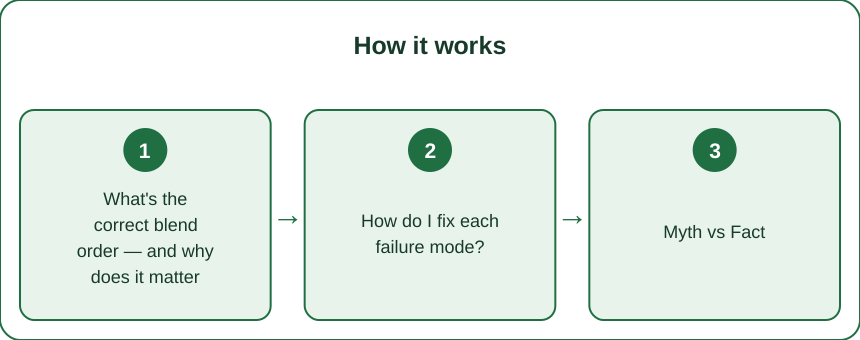
What’s the correct blend order — and why does it matter this much?
The order: liquid first → leafy greens → soft items (yogurt, banana, nut butter) → frozen last on top.
The reasons each position matters:
- Liquid first gives the blades a vortex to build — dry-loaded blenders chop air pockets and leave dry islands at the bottom corners.
- Greens second, and here’s the pro move: blend liquid + greens ALONE for 20-30 seconds before anything else — spinach and kale are the grit-source, and they only fully liquefy with unobstructed blade access. Greens blended alongside frozen chunks hide in the slush half-chopped: that’s the green-sand texture in one sentence.
- Soft items third thicken the vortex gradually.
- Frozen last, on top: the weight presses everything into the blades, and frozen pieces get pulled down progressively rather than jamming the works.
The liquid math that prevents watery: frozen fruit is future liquid — a smoothie that looks perfect mid-blend drinks thin because the frozen fraction keeps melting. Start with roughly ¾ of the liquid that seems right (a common working base: 1 cup liquid per 2-2.5 cups solids), blend, then thin toward target. The asymmetry rules the technique: thinning takes one pour; un-thinning takes more frozen fruit you may not have.
How do I fix each failure mode?
Gritty (the greens problem): the liquid-plus-greens pre-blend above fixes 90% — the remainder: blend 15 seconds longer than instinct says (fiber needs time), and if your blender is genuinely budget-tier, choose baby spinach over mature kale (tenderness compensates for wattage). Frozen greens blend smoother than fresh in weak blenders, counterintuitively — the ice-shattered cell structure surrenders faster.
Watery: the ¾-liquid start, frozen banana as the universal body-builder, and the rescue move for an already-thin batch: a handful of frozen fruit or 3-4 ice cubes, 15 more seconds. (Chronic wateriness with correct ratios = too much high-water fruit — melon and citrus are flavor players, not structure players.)
Foamy (the aeration problem): high speeds whip air into thin mixtures — especially apple, pear, and citrus-heavy blends. Fixes: lower speed for shorter time once ingredients are incorporated, add a foam-suppressing creamy element (yogurt, banana, avocado), and let the finished smoothie rest 60 seconds — foam separates fast and pours off.
Sludgy-by-the-second-sip (the binder problem): oats, chia, flax, and many protein powders keep absorbing liquid after blending — the drink thickens in real time. Fixes: halve the binder dose, add binders last with a brief final pulse (less activation), thin slightly beyond target knowing it will close the gap, and drink promptly — the make-ahead version of a chia-heavy smoothie is intentionally a spoon food (that’s just overnight-oats logic arriving early).
Myth vs Fact: Smoothie Texture Edition
Myth: A more expensive blender fixes all texture problems. Fact: High-power blenders forgive order-and-ratio errors, they don’t repeal them — a badly-loaded premium blender still makes foam and sludge, and a correctly-loaded budget one makes respectable smoothies (with the greens pre-blend doing the heavy lifting). Technique transfers across the price range; wattage just widens the margin.
Myth: Ice is the best thickener. Fact: Ice thickens briefly then dilutes permanently — it’s melted water on a delay. Frozen fruit thickens AND flavors; frozen banana is the category’s structural workhorse for a reason. Ice earns its slot only when calories/sweetness are maxed and cold-thickness is still wanted.
Myth: Longer blending always means smoother. Fact: Past the incorporation point, extra high-speed time mostly adds air (foam) and heat (friction genuinely warms the mix — the lukewarm-smoothie surprise of 3-minute blends). The curve: blend to smooth, confirm with a 5-second check, stop. Grit that survives proper order and reasonable time is an ingredient-vs-blender mismatch, not a patience deficit.
The formula reframe: recipes list what; texture lives in how — order, ratio, speed, and time are the four dials, and they’re the same on every blender ever sold.
FAQ: Smoothie Texture Questions, Answered
How do I make a smoothie bowl thick enough for toppings?
Invert the liquid math: minimal liquid (start at ⅓-½ the drinking version), all-frozen fruit, and the tamper (or stop-and-scrape patience) doing what pourability normally does. The spoon-stands-up test is the spec — and yes, it’s harder on budget blenders: bowl thickness is where wattage genuinely earns its price.
Why does my meal-prep smoothie separate in the fridge?
Settling is physics, not spoilage — fiber and solids sink, water rises. The fixes: fill containers to the top (less air = less separation), shake before drinking, and accept the 24-hour quality window for pre-blended batches. The better prep strategy: freezer packs of pre-portioned solids, blended fresh in 90 seconds.
My protein powder makes everything chalky — which fix applies?
A hybrid of gritty and sludgy: add powder LAST with a short low-speed pulse (over-blending protein is a foam-and-chalk multiplier), pair it with a creamy element (banana, yogurt, nut butter — chalkiness hides in fat), and if a specific powder stays chalky through good technique, the powder is the variable — blends vary enormously in solubility, and the fix lives in the next tub, not the next technique. This is general information, not medical advice.
TL;DR:
- The order: liquid → greens (pre-blend 20-30s alone!) → soft → frozen on top — and start with ¾ of the liquid that looks right
- Four failures, four fixes: gritty = greens pre-blend; watery = liquid math + frozen banana; foamy = lower speed + creamy element; sludgy = halve the binders, drink promptly
- Ice dilutes on a delay — frozen fruit is the structural thickener; over-blending adds foam and warmth
- Technique beats wattage: expensive blenders widen the margin, order-and-ratio decide the result
The recipe told you what to put in — the four dials were always how it turns out, and now they’re labeled. This is general information, not medical advice.
Keep Reading
This article is for general informational purposes only and is not medical advice. Always consult a qualified health professional for guidance specific to you.