Why Your Protein Smoothie Always Has Clumps (and the Actual Fix)
Quick Answer: Protein powder clumps because it hits liquid before the blades create turbulence, letting the outer layer of powder gel instantly and trap dry powder inside. Add liquid first, blend the base briefly, then add protein powder last and blend immediately — not the reverse order most people default to.
You dump everything in, blend, and still find chalky little clumps at the bottom of the cup. That’s not a weak blender — it’s almost always the order ingredients went in.

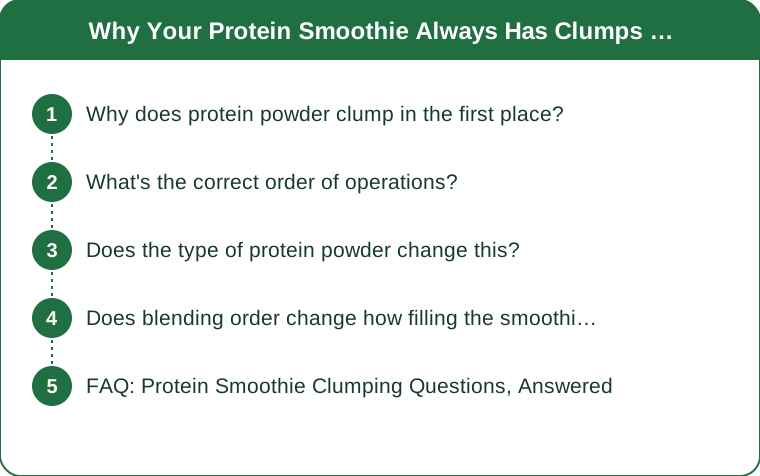
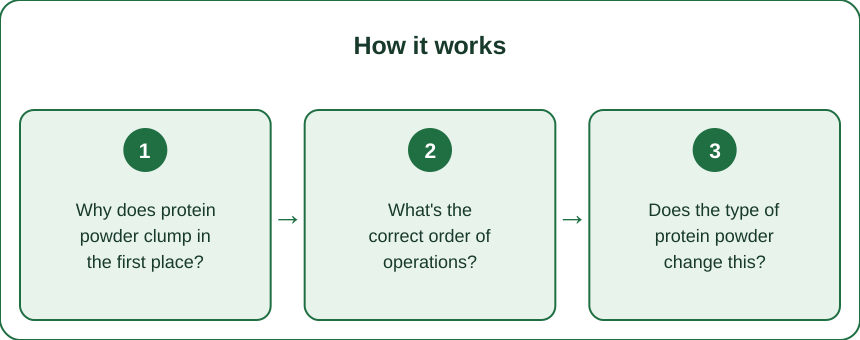
Why does protein powder clump in the first place?
Protein powder particles are hygroscopic — they absorb liquid fast on contact. When powder is dumped into a mostly-empty blender and liquid poured on top, the outer surface of each clump of powder instantly gels, forming a barrier that traps dry powder inside it. The blades then just spin around these sealed clumps instead of breaking them apart.
This is a physics-of-mixing problem, not a blender power problem — even an expensive high-powered blender will struggle if the powder gels before the blades ever reach it.
What’s the correct order of operations?
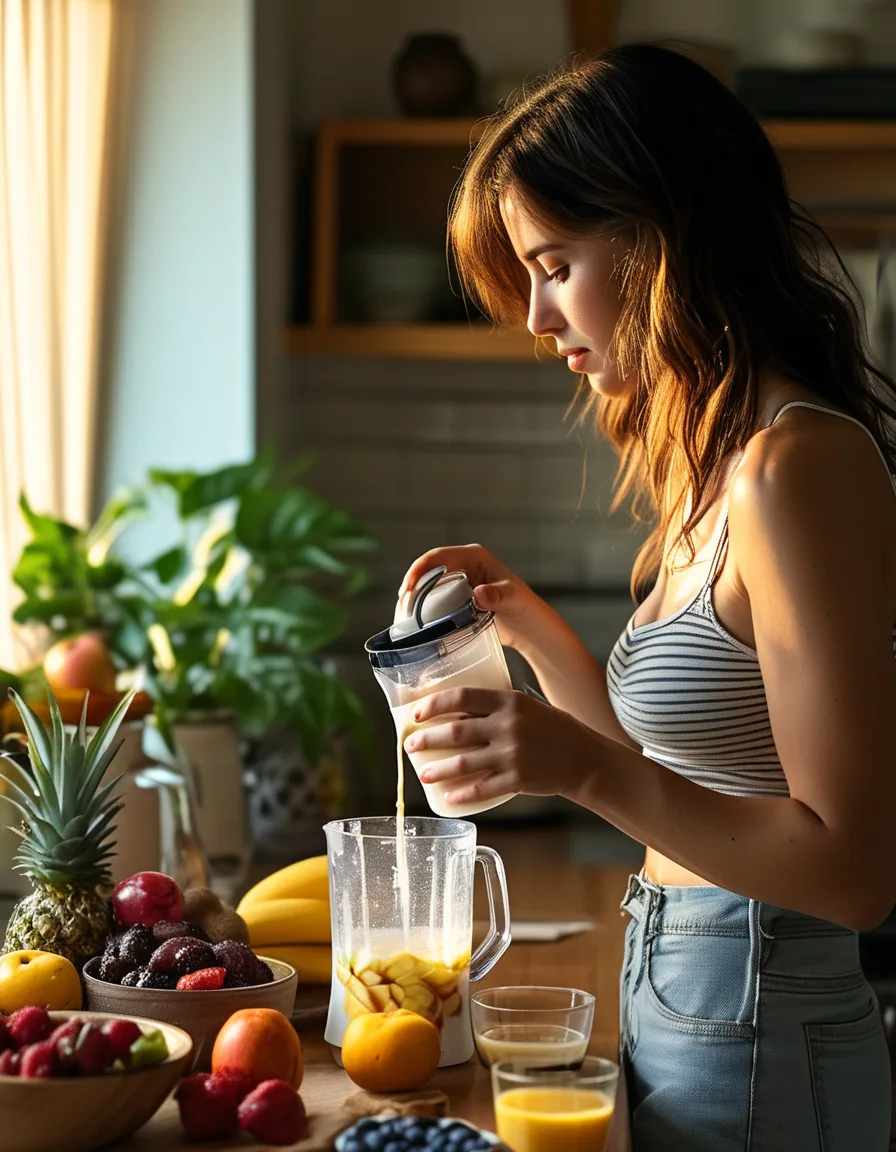
1. Liquid first (milk, water, juice) — always at the bottom. 2. Soft ingredients next (banana, yogurt, frozen fruit) — these create the base texture. 3. Blend briefly (10-15 seconds) to establish a moving vortex. 4. Add protein powder last, directly into the moving liquid, and blend immediately.
Adding powder into an already-moving vortex means every particle contacts liquid gradually and individually, rather than all at once in a static pool — that’s the entire mechanism that prevents clumping.
Does the type of protein powder change this?
Yes — whey isolate mixes most easily due to smaller particle size and higher solubility. Whey concentrate is a bit clumpier by nature. Plant-based proteins (pea, hemp, rice blends) are the most clump-prone of all, since they’re generally less soluble and often have a grittier base texture regardless of mixing order.
If you’re using a plant-based protein and still getting some texture even with correct order, that’s largely inherent to the ingredient — a slightly longer blend time (20-30 seconds total) helps more than reordering further.
Does blending order change how filling the smoothie feels?
This is the underappreciated side effect: blending order also changes fiber distribution and how well ingredients emulsify, which affects satiety. A smoothie where fiber-rich ingredients (oats, chia, greens) are blended thoroughly into a smooth suspension digests differently — and tends to feel more filling for longer — than one where those ingredients settle unevenly because of poor initial mixing.
So the same fix that solves clumping also tends to produce a smoother, more evenly filling smoothie overall — it’s not just cosmetic.
FAQ: Protein Smoothie Clumping Questions, Answered
Does freezing the protein powder or pre-mixing it with a little liquid help?
Pre-mixing a small amount of protein with a splash of liquid into a thin paste before adding it to the main blend is a solid backup trick, especially for plant-based powders — it front-loads the hydration step in a controlled way.
Should I use a shaker bottle instead of a blender for protein smoothies?
Shaker bottles work fine for protein-and-liquid-only shakes but struggle more with clumping once you add frozen fruit or thick ingredients — a blender’s continuous motion handles mixed-texture smoothies better.
Does room-temperature vs cold liquid matter for clumping?
Slightly — very cold liquid slows how fast powder dissolves, which can mildly increase clumping risk. Room-temperature or lightly chilled liquid dissolves protein powder a bit more readily than ice-cold liquid.
TL;DR:
- Clumping happens because powder gels on contact before blades reach it — not a blender power issue
- Correct order: liquid, soft ingredients, brief blend, protein powder last, blend immediately
- Plant-based proteins clump more inherently than whey isolate — expect it, blend a bit longer
- The same fix also improves how evenly filling the smoothie feels
It’s entirely about sequence — same ingredients, same blender, dramatically fewer clumps just by changing what goes in when.
Keep Reading
This article is for general informational purposes only and is not medical advice. Always consult a qualified health professional for guidance specific to you.