The Smoothie Bowl: Engineering Thickness You Can Eat With a Spoon
The smoothie bowl’s entire identity is thickness — spoonable, topping-supporting, soft-serve-adjacent — and the difference between bowl and soup is engineering: frozen ratios, liquid restraint and blender patience. The café’s $14 secret, reverse-engineered.
The Frozen Doctrine
Bowls demand ALL-frozen fruit — the frozen banana as the structural base (creaminess architecture), frozen berries or mango as the flavor layer. Fresh fruit is soup’s advocate; ice is grit’s. The freezer bag of sliced bananas remains the genre’s foundational infrastructure.
The Liquid Restraint
The defining discipline: liquid at a FRACTION of drinking-smoothie levels — a few tablespoons to start, added teaspoon-wise only when the blender genuinely stalls. Every extra splash is a step toward soup; the tamper (or stop-and-stir patience) substitutes for liquid entirely.
The Blender Reality
Thick blending taxes machines: high-power blenders with tampers eat the job; standard blenders manage with the pulse-scrape-pulse cycle and smaller batches (the bowl-for-one is the standard blender’s honest capacity). Straining the machine smells like burning motor — soup is cheaper than a new blender; add the teaspoon.
The Topping Architecture
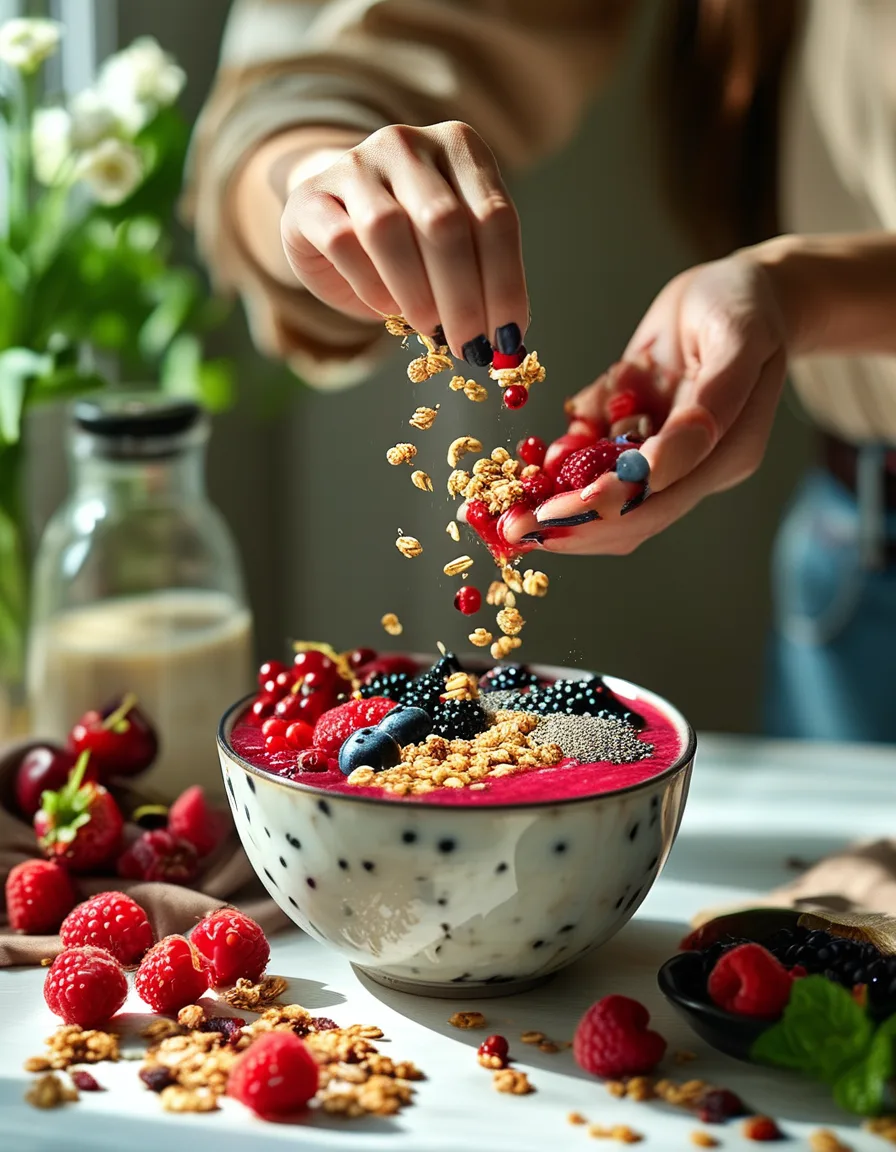
The bowl’s second act: toppings with structural integrity (granola clusters, coconut flakes, cacao nibs, whole berries) arranged in the ritual rows — plus the protein footnote (the pretty bowl is often a carb solo; the yogurt swirl or protein-blended base makes it breakfast). Eat immediately: thickness is a temporary state and melting waits for no photograph.
All-frozen fruit, tablespoons of liquid, pulse and scrape, rows of structure. The bowl was always a thickness engineering exam — pass it once and the $14 café version becomes a $2 habit.
Keep Reading
This article is for general informational purposes only and is not medical advice. Always consult a qualified health professional for guidance specific to you.